
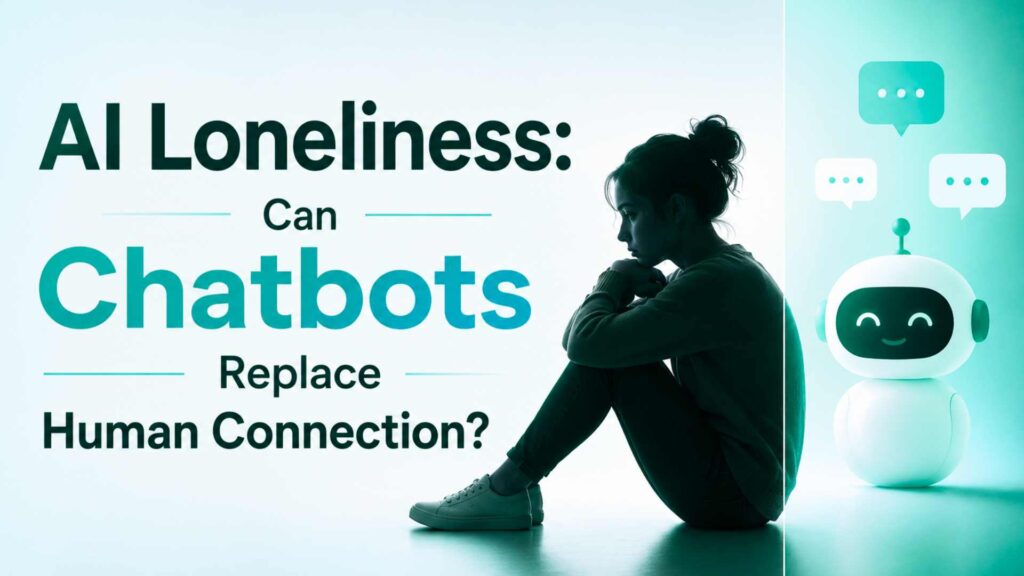
Artificial Intelligence has become an important part of our daily lives. From writing emails and solving work problems to answering personal questions, AI-powered chatbots are helping millions of people every day. Many users now spend hours talking to AI—not only for information but also for emotional comfort. This growing trend has introduced a new topic in mental health called AI Loneliness.
Today, people often describe AI as someone always available, never judges them, and patiently listens to everything they have to say. For someone feeling lonely or emotionally overwhelmed, this can feel comforting. But an important question remains:
Can AI companions truly replace human connection?
Current research says that while AI can provide temporary emotional support, it cannot replace meaningful human relationships. Real emotional bonding involves empathy, shared experiences, physical presence, trust, and genuine care—qualities that artificial intelligence cannot truly experience.
Understanding AI Loneliness has become increasingly important as more people rely on AI companionship and AI chatbot mental health tools in their daily lives.
What is AI Loneliness?
AI Loneliness refers to a situation where individuals begin depending on AI chatbots or AI companions for emotional support instead of building healthy relationships with real people.
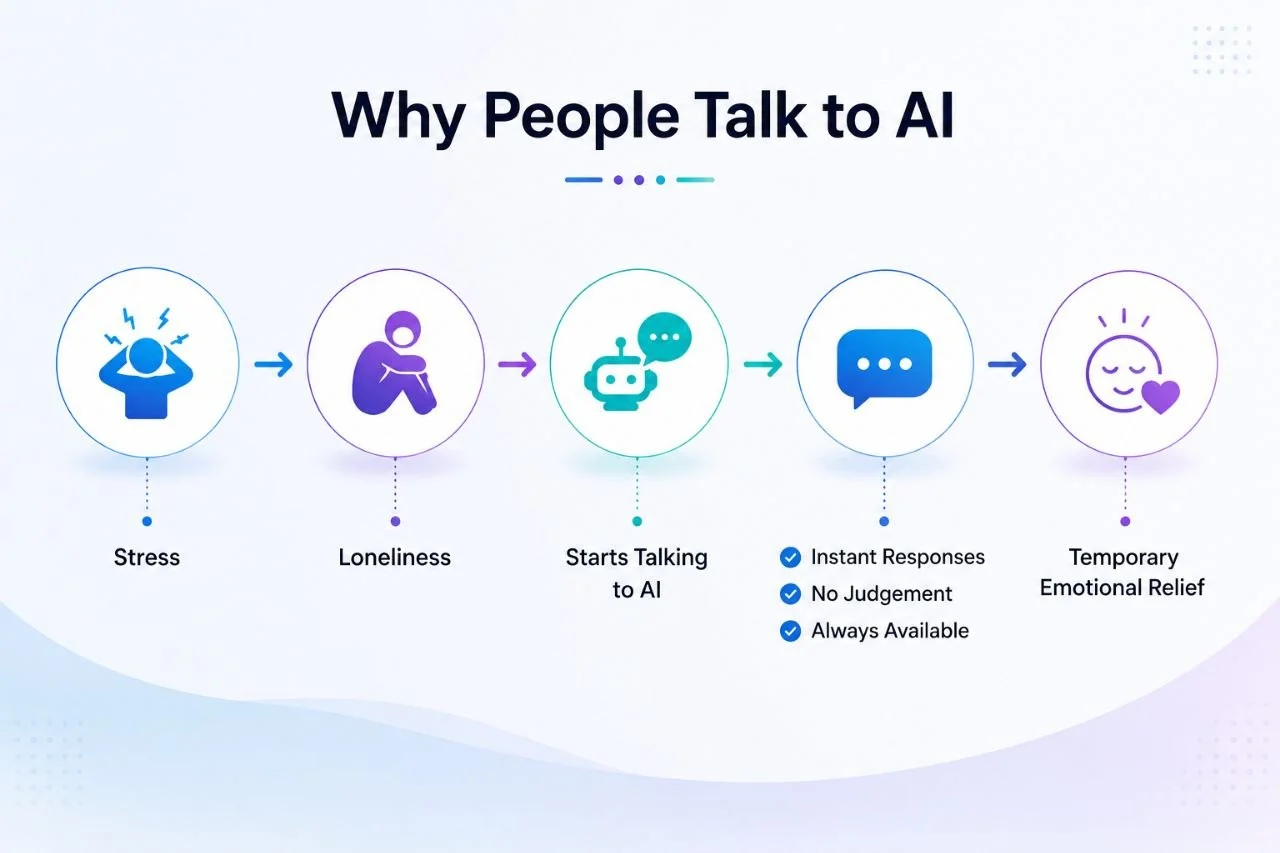
Many people first turn to AI because they already feel lonely, stressed, anxious, or socially isolated. Since AI responds instantly without criticism, it feels like a safe place to express emotions.
However, experts warn that if AI becomes someone’s primary emotional support, it may reduce real-life social interaction and increase digital loneliness over time.
This doesn’t mean AI is harmful. It means people should use AI as a helpful tool rather than a replacement for meaningful human relationships.
What Research Says About AI and Loneliness
Several recent studies have explored the relationship between AI and emotional well-being.
A joint study conducted by researchers from MIT Media Lab and OpenAI found that individuals who engaged in frequent emotional conversations with AI chatbots reported higher emotional attachment to AI and, in some cases, greater feelings of loneliness when offline.
Another research study involving AI companion users found that people with fewer close relationships were more likely to depend on AI for companionship. Researchers concluded that AI may reduce loneliness temporarily but cannot replace real-world relationships.
The World Health Organisation (WHO) has also highlighted loneliness as a growing public health concern, linking long-term social isolation with anxiety, depression, heart disease, and reduced overall well-being.
These findings show that AI should support—not replace—human interaction.
Why Are People Choosing AI Companionship?
The popularity of AI companionship continues to grow because modern life has become increasingly stressful.
People often experience:
- Busy work schedules
- Relationship challenges
- Academic pressure
- Social anxiety
- Living away from family
- Emotional stress
- Depression
- Lack of someone to talk to
Unlike humans, AI is available 24 hours a day.
It responds instantly.
It doesn’t criticise.
It remembers previous conversations.
These features make AI feel comforting, especially during difficult emotional moments.
Benefits of AI Chatbot Mental Health Support
There are several positive ways AI is helping people today.
1. Immediate Support
AI provides instant conversations whenever someone needs guidance.
2. Mental Health Awareness
Many AI chatbot mental health platforms educate users about anxiety, depression, stress management, and emotional wellness.
3. Encourages Self-Reflection
Talking with AI often helps people organise their thoughts and better understand their emotions.
4. Reduces Mental Health Stigma
Some individuals feel more comfortable discussing emotional problems with AI before speaking to family or mental health professionals.
5. Better Accessibility
People living in remote areas or waiting for therapy appointments can access reliable information through AI.
These benefits show that AI can become a useful mental health support tool when used responsibly.
The Limitations of Emotional AI
Although Emotional AI is becoming increasingly advanced, it still has important limitations.
AI can recognise emotional language.
It can generate supportive responses.
It can simulate empathy.
However, it does not actually experience emotions.
Real human connection includes:
- Genuine love
- Shared memories
- Physical comfort
- Eye contact
- Emotional understanding
- Mutual trust
- Long-term relationships
AI can imitate these conversations but cannot truly feel them.
That is the biggest difference between artificial intelligence and human relationships.
Human Connection vs Emotional AI
| Human Connection | Emotional AI |
|---|---|
| Real emotions | Simulated emotions |
| Physical presence | Digital conversation |
| Shared life experiences | Data-based responses |
| Genuine empathy | Programmed empathy |
| Mutual relationship | One-sided interaction |
Can AI Therapy Replace Professional Mental Health Care?
Many people now ask whether AI therapy can replace psychologists or psychiatrists.
The simple answer is no.
AI therapy tools can:
- Teach relaxation exercises
- Explain mental health conditions
- Suggest coping strategies
- Encourage positive habits
However, AI cannot:
- Diagnose mental illnesses
- Understand complex trauma
- Manage psychiatric emergencies
- Prescribe medication
- Replace psychotherapy
Mental health professionals combine scientific knowledge with clinical judgment, empathy, and years of experience.
AI should always complement professional care—not replace it.
Signs You May Be Experiencing AI Loneliness
Sometimes people become so comfortable talking with AI that they slowly withdraw from real relationships.
Watch for these signs:
- Spending more time with AI than family
- Avoiding social gatherings
- Feeling emotionally attached to AI companions
- Sharing every personal problem only with AI
- Losing interest in meeting friends
- Feeling anxious when AI is unavailable
If these patterns continue, it may indicate growing AI Loneliness.
How to Maintain a Healthy Relationship with AI
Technology works best when it supports our lives rather than replacing them.
Here are practical ways to maintain balance.
Set Daily Limits
Avoid spending several hours every day in emotional conversations with AI.
Prioritise Human Relationships
Spend time with parents, partners, children, friends, and colleagues.
Continue Outdoor Activities
Exercise, walking, sports, and hobbies improve emotional well-being.
Use AI for Learning
Let AI help you learn new skills, solve problems, or organise your work.
Practice Digital Wellness
Take regular breaks from screens and enjoy offline activities.
Seek Professional Support
If loneliness becomes overwhelming, consult a qualified mental health professional instead of depending entirely on AI.

The Future of AI and Human Connection
Artificial Intelligence will continue to become smarter.
Future AI companions may sound even more natural and personalised.
They may help people learn, manage stress, improve productivity, and provide emotional encouragement.
However, researchers agree that technology should strengthen human connection, not replace it.
Healthy societies are built on trust, compassion, relationships, community, and meaningful conversations—things that technology alone cannot create.
The future should focus on using AI responsibly while encouraging stronger family bonds, friendships, and social interaction.
When Should You Seek Professional Help?
If you experience:
- Persistent loneliness
- Anxiety
- Depression
- Social withdrawal
- Emotional dependence on AI
- Relationship difficulties
- Difficulty functioning at work or school
it is important to seek professional help.
Early mental health support can improve emotional resilience and help you rebuild healthy social connections.
Consult Dr Ankesh Singh at COGNiZEN CARE
If AI Loneliness, digital loneliness, social isolation, anxiety, depression, or emotional dependence on AI companions is affecting your daily life, professional support can help.
Dr Ankesh Singh, Consultant Psychiatrist at COGNiZEN CARE, provides expert evaluation and treatment for anxiety disorders, depression, technology-related behavioural concerns, stress, emotional well-being, and relationship challenges. Through evidence-based psychiatric care, counselling, and personalised treatment plans, he helps individuals develop healthier digital habits while strengthening meaningful human relationships.
If excessive dependence on AI is beginning to replace real-life interactions, don’t ignore the signs. Early intervention can improve emotional health, restore balance, and help you reconnect with the people who matter most.

Final Thoughts
AI Loneliness is one of the newest mental health challenges of the digital age. While AI companionship, AI chatbot mental health tools, and Emotional AI can provide valuable support, they should never replace genuine human connection.
Technology is at its best when it helps us learn, grow, and access support—not when it becomes our only source of emotional comfort. Real relationships with family, friends, and communities remain essential for long-term mental well-being.
Use AI wisely, stay connected with the people around you, and seek professional help whenever loneliness, anxiety, or emotional dependence begins to affect your quality of life. The healthiest future is one where artificial intelligence and human relationships work together—not in competition.