
We live in the most digitally connected era in human history. With smartphones, social media, instant messaging, video calls, and online communities, we can reach someone anywhere in the world within seconds. Yet, despite having more ways to communicate than ever before, loneliness is becoming one of the fastest-growing public health concerns.
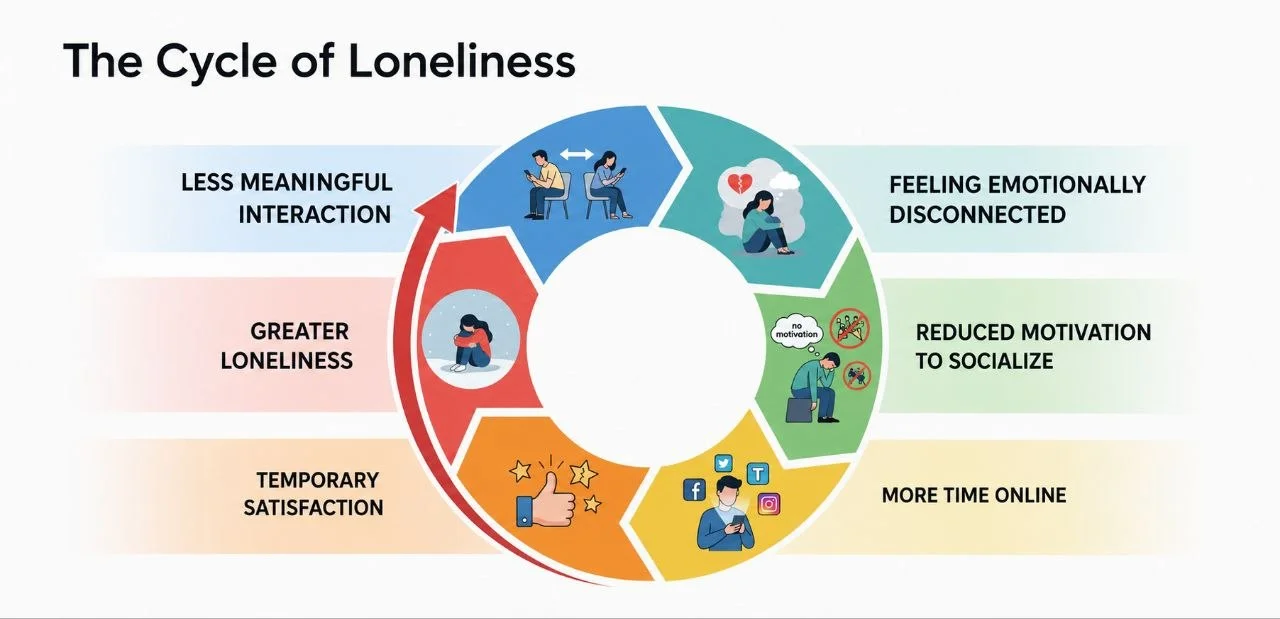
Many people have hundreds or even thousands of online followers but still feel emotionally disconnected. A quick exchange of messages or a “like” on social media often cannot replace the comfort of a meaningful conversation, a shared meal, or time spent with loved ones.
This growing gap between digital communication and genuine relationships has caught the attention of researchers, psychologists, and healthcare organisations around the world. Recent reports suggest that loneliness is not simply an emotional experience—it is a health issue that can affect mental, physical, and social well-being.
What Is Loneliness?
Loneliness is the distressing feeling that occurs when the social relationships we have do not match the relationships we need or desire. It is different from simply being alone. A person can enjoy solitude without feeling lonely, while someone surrounded by people may still experience deep emotional isolation.
For example:
- A college student living away from family may feel lonely despite having classmates.
- An elderly person living with relatives may still feel emotionally unheard.
- A working professional may spend all day online but have very few meaningful conversations.
Loneliness is about the quality of relationships, not the number of contacts.
The Growing Loneliness Epidemic
In 2025, the World Health Organisation (WHO) released a landmark report describing loneliness and social isolation as major global public health challenges. The report highlights that loneliness affects people of all ages and calls for stronger action to improve social connection because it has significant effects on health, well-being, education, and society.
The issue is no longer limited to older adults. Teenagers, university students, working professionals, and even people with active online lives increasingly report feeling emotionally disconnected.
Why Are We Feeling More Lonely Despite Being Connected Online?
1. Online Connections Often Lack Emotional Depth
Social media allows us to stay informed about people’s lives, but it doesn’t always create meaningful relationships.
Scrolling through updates or reacting with emojis cannot fully replace:
- Face-to-face conversations
- Shared experiences
- Physical presence
- Emotional understanding
- Genuine empathy
Many online interactions are brief and superficial, leaving emotional needs unmet.
2. Quality Matters More Than Quantity
Having 5,000 followers does not necessarily mean having five people you can trust during difficult times.
Research consistently shows that strong, supportive relationships improve emotional well-being far more than having a large number of casual connections.
One close friend who genuinely listens is often more valuable than hundreds of online acquaintances.
3. Social Media Encourages Comparison
People usually share the happiest moments of their lives online.
Vacations.
Promotions.
Celebrations.
Perfect family photos.
When people compare their everyday struggles with carefully selected highlights from others, they may begin to feel inadequate, isolated, or left behind.
This constant comparison can contribute to both loneliness and lower self-esteem.
4. Remote Work and Digital Communication
Technology has made working from home easier, but it has also reduced everyday human interaction.
Many professionals spend entire days communicating through emails, chats, and video meetings without meaningful in-person conversations.
While productivity may remain high, emotional connection often decreases.
5. Busy Lifestyles Leave Less Time for Relationships
Modern life has become increasingly fast-paced.
Long work hours.
Traffic.
Academic pressure.
Household responsibilities.
Digital distractions.
These leave little time for nurturing friendships and family relationships.
Healthy relationships require regular attention, not just occasional messages.
How Loneliness Affects Mental Health
Persistent loneliness affects much more than mood.
Research links long-term social disconnection with increased risks of:
- Anxiety
- Depression
- Chronic stress
- Poor sleep
- Reduced self-confidence
- Emotional exhaustion
- Lower life satisfaction
People experiencing prolonged loneliness may also find it more difficult to cope with everyday challenges.
Physical Health Is Also Affected
Loneliness is not only a mental health concern.
According to the U.S. Surgeon General’s advisory, poor social connection is associated with higher risks of heart disease, stroke, premature mortality, and other health problems. The advisory emphasises that healthy relationships are a key part of overall health.
This highlights why maintaining meaningful relationships is just as important as eating well or exercising regularly.
Signs That Loneliness May Be Affecting You
Many people do not immediately recognise loneliness.
Some common signs include:
- Feeling disconnected even around others
- Spending most free time online
- Avoiding social gatherings
- Constant sadness
- Difficulty trusting others
- Low motivation
- Poor sleep
- Feeling that no one truly understands you
Recognising these signs early makes it easier to seek support.
Practical Ways to Reduce Loneliness
1. Prioritise Face-to-Face Conversations
Whenever possible, meet friends or family in person.
Even a short conversation over tea can strengthen emotional bonds.
2. Limit Passive Social Media Use
Instead of endlessly scrolling, use technology intentionally.
Message a friend.
Schedule a video call.
Arrange to meet someone offline.
3. Join Community Activities
Participate in:
- Sports clubs
- Yoga classes
- Volunteer work
- Book clubs
- Religious or cultural groups
- Local community events
Shared activities naturally create meaningful relationships.
4. Strengthen Family Relationships
Simple habits matter.
Eat together.
Take evening walks.
Celebrate small achievements.
Listen without distractions.
These everyday moments build trust and emotional security.
5. Practice Active Listening
Healthy relationships are built through attention, empathy, and understanding.
Instead of focusing on what to say next, genuinely listen to others.
People remember how you made them feel.
6. Balance Technology with Real Life
Technology should help maintain relationships—not replace them.
Set screen-time boundaries and make room for offline experiences.
A healthy digital balance supports both emotional and physical well-being.
7. Seek Professional Support
If loneliness persists for weeks or months and begins affecting work, studies, sleep, or relationships, speaking with a mental health professional can help.
Counselling can identify underlying emotional concerns such as anxiety, depression, grief, or social anxiety that may contribute to loneliness.
Graphic: Building Healthy Social Connections
| Daily Habit | Positive Impact |
|---|---|
| Meet family regularly | Emotional security |
| Exercise with friends | Better mood |
| Join community groups | New relationships |
| Limit excessive screen time | More real-life interaction |
| Talk openly about feelings | Stronger emotional bonds |
| Seek counselling when needed | Improved mental well-being |
The Role of Society
Addressing loneliness is not only an individual responsibility.
Families, schools, workplaces, healthcare providers, and communities all play an important role in creating environments where people feel connected and supported.
The WHO Commission on Social Connection encourages governments, organisations, and communities to treat social connection as a public health priority and invest in practical solutions that strengthen relationships and reduce isolation.
Consult Dr Ankesh Singh at COGNiZEN CARE
If persistent loneliness, anxiety, depression, stress, or social isolation is affecting your daily life, seeking professional support can be an important first step.
At COGNiZEN CARE, Dr Ankesh Singh, Consultant Psychiatrist, provides evidence-based assessment and treatment for anxiety disorders, depression, stress-related conditions, social isolation, emotional difficulties, and other mental health concerns. Through personalised counselling, psychotherapy, and psychiatric care, individuals receive compassionate support to improve emotional well-being and rebuild meaningful social connections.
If you have been feeling emotionally disconnected despite being surrounded by people or constantly connected online, you do not have to face it alone. Early support can help you regain confidence, strengthen relationships, and improve your quality of life.

Final Thoughts
Technology has transformed the way we communicate, but it has not eliminated the human need for genuine connection. While social media and digital platforms make it easier to stay in touch, they cannot fully replace the warmth of face-to-face conversations, shared experiences, and supportive relationships.
Loneliness is a growing challenge, but it is also one that can be addressed. By investing time in meaningful relationships, maintaining a healthy balance between online and offline life, and seeking help when needed, we can build stronger emotional resilience and healthier communities.
The most meaningful connections are not measured by the number of followers we have—they are measured by the people who truly listen, care, and stand beside us when we need them most.