
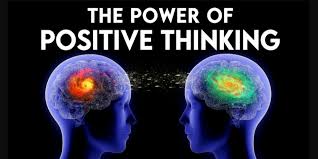
We have a constant roommate. They live in our heads, talking to us from the moment we wake up until we drift off to sleep. Sometimes, this roommate is a cheerleader, telling us we can handle anything. But for many of us, far too often, this roommate is a critic. It points out our flaws, catastrophizes our future, and replays our past mistakes on an endless loop.
This internal dialogue is the soundtrack of our lives. And the scary part? We start to believe it.
If you feel stuck, overwhelmed, or constantly drained, the culprit might not be your job, your relationship, or your bank account. It might be your mindset.
Welcome to your guide on how to transform your life through the power of positive thinking. This isn’t about wearing rose-colored glasses or ignoring the very real difficulties of life (that’s toxic positivity, and we’ll talk about why to avoid it). This is about cognitive restructuring. It is about taking control of that inner roommate and teaching them a new language: the language of optimism, resilience, and growth.
In this detailed guide, we will explore the science behind mindset shifts, the physical and mental benefits of positive thinking, and actionable, step-by-step strategies to rewire your brain for a happier mind. We will use the top strategies from psychology and neuroscience to help you build a success mindset. And, because sometimes negative thinking is a sign of a deeper issue, we will connect you with the holistic expertise of Dr. Ankesh Singh at COGNiZEN CARE.
What is Positive Thinking? (And What It Isn’t)
Before we can practice it, we have to define it. There is a misconception that positive thinking means being happy all the time. It means smiling when your car breaks down or pretending you aren’t hurt when someone insults you.
That is not positive thinking; that is denial.
True positive thinking is actually positive realism. It is the ability to look at a difficult situation and acknowledge the difficulty, but choose to focus on the solution rather than the problem. It is the belief that “this is hard, but I have the resources to handle it.”
- Negative Mindset: “I failed this project. I’m a failure. I’ll never get promoted.” (Fixed Mindset)
- Positive Mindset: “I failed this project. That hurts. But I learned X, Y, and Z. Next time, I will do it differently.” (Growth Mindset)
The core difference is hope. Optimism isn’t assuming the best will happen; it’s believing that whatever happens, you will be okay.
The Science of the Spark – Neuroplasticity and Your Brain
You might think, “I’m just a pessimist. That’s how I was born.” Science disagrees.
Your brain is not carved in stone; it is like plastic. This concept is called neuroplasticity. Every time you think a thought, a neural pathway in your brain fires. If you think that thought again, the pathway gets stronger. If you think it every day for ten years, that pathway becomes a superhighway.
For many of us, the “worry” and “negativity” highways are wide and fast because we use them the most. This is known as the negativity bias—our evolutionary tendency to focus on threats.
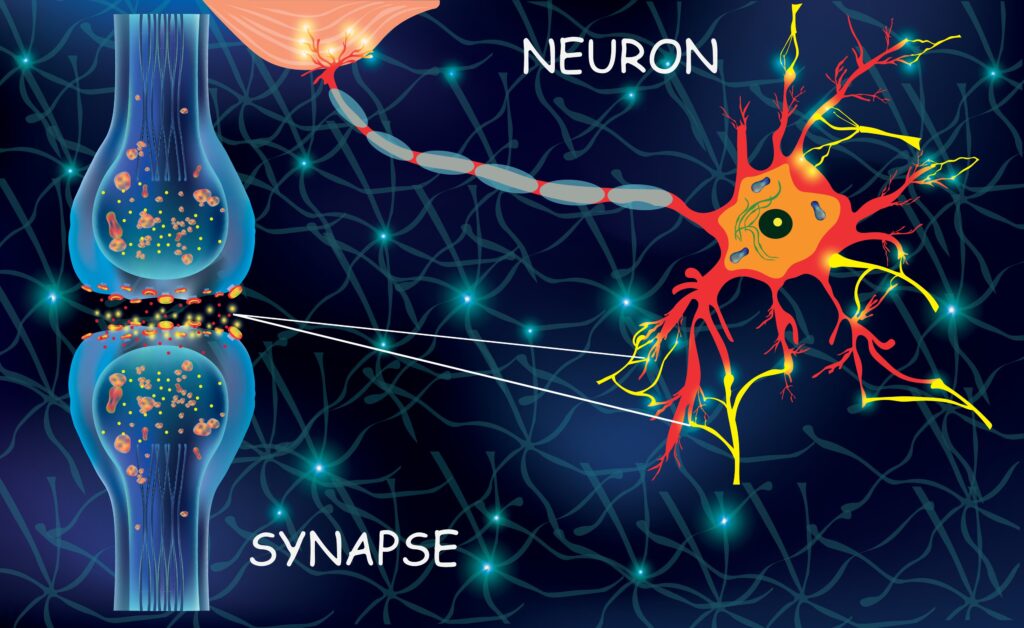
But here is the good news: You can build new highways.
By consciously practicing positive thoughts, gratitude, and reframing, you physically alter the structure of your brain. You weaken the connections to fear and anger and strengthen the connections to happiness and emotional regulation. You are quite literally rewiring your brain for mental well-being.
The Incredible Benefits (Why You Should Care)
Why put in the effort? Because the benefits of positive thinking extend far beyond just “feeling good.” It impacts your entire existence.
1. Physical Health Benefits
The mind-body connection is powerful. Chronic negativity keeps your body in a state of stress, flooding you with cortisol. Positive thinking lowers stress hormones. Studies from the Mayo Clinic and others have linked optimism to:
- Increased life span.
- Lower rates of depression.
- Better heart health and reduced risk of cardiovascular disease.
- Stronger immune system (optimists fight off the common cold better!).
- Better pain management.
2. Mental Health Benefits
This is the most direct impact.
- Reduced Anxiety: Optimism calms the amygdala (fear center).
- Stress Management: You cope with stressors more effectively.
- Resilience: You bounce back faster from trauma or failure.
3. Professional and Social Success
- Better Relationships: People are drawn to positive energy. Negativity repels; positivity attracts.
- Career Growth: Positive thinkers are better problem solvers, more creative, and better leaders. A success mindset is often the deciding factor between a manager and a CEO.
The Toolkit – 7 Steps to a Happier Mind
You cannot just “decide” to be positive. You have to train for it, like training a muscle at the gym. Here are 7 actionable steps to positive thinking.
Step 1: Catch the ANTs (Automatic Negative Thoughts)
You can’t change what you don’t notice. Most of our negativity is subconscious—these are Automatic Negative Thoughts (ANTs).
- The Strategy: For one day, try to “audit” your thoughts. When you feel a dip in your mood, ask yourself: “What was I just thinking?”
- Common ANTs:
- Filtering: Focusing only on the bad details and ignoring the good.
- Catastrophizing: Expecting the absolute worst-case scenario.
- Personalizing: Blaming yourself for everything that goes wrong.
- Polarizing: Seeing things as only “good” or “bad” (no middle ground).
Step 2: Practice Cognitive Reframing (Flip the Script)
Once you catch an ANT, don’t just let it sit there. Challenge it. This is a core technique in Cognitive Behavioral Therapy (CBT).
- Negative Thought: “I messed up that presentation. Everyone thinks I’m stupid.”
- The Challenge: “Is that true? Did anyone say that? Or did they just ask questions? I actually prepared well, and I stumbled once. That is human.”
- The Reframe: “I learned a lot from that meeting. I’m going to work on my public speaking skills so I feel more confident next time.”
Step 3: The Daily Gratitude Practice
Gratitude is the fastest way to shift your vibration from lack to abundance. You cannot feel envious, angry, or fearful while you are feeling grateful.
- The Strategy: Keep a Gratitude Journal. Every morning or night, write down three things you are thankful for.
- The Rules: Be specific. Don’t just write “Family.” Write, “I am grateful for the text my sister sent me today that made me laugh.”
- Why it works: It forces your Reticular Activating System (RAS)—the part of your brain that filters information—to scan your environment for good things instead of threats.
Step 4: Use Positive Affirmations (Correctly)
Affirmations get a bad rap because people use them wrong. Standing in front of a mirror lying to yourself (“I am a billionaire”) doesn’t work. Your brain rejects it.
- The Strategy: Use “bridge” affirmations or value-based affirmations.
- Instead of “I am perfect,” try “I am a work in progress and I am getting better every day.”
- Instead of “I have no fear,” try “I am courageous enough to take action despite my fear.” Repeat these positive affirmations daily to overwrite the negative scripts in your subconscious.
Step 5: Curate Your Environment
You are the average of the five people you spend the most time with. If you are surrounded by energy vampires, cynics, and constant complainers, positive thinking will be an uphill battle.
- The Strategy: Audit your circle. Set boundaries with toxic people. Seek out positive influences, mentors, and friends who uplift you.
- Digital Environment: Unfollow social media accounts that make you feel inadequate, angry, or anxious. Fill your feed with motivational quotes, educational content, and inspiring stories.
Step 6: Move Your Body to Shift Your Mind
Sometimes, you can’t think your way out of a funk. You have to move your way out.
- The Science: Exercise releases endorphins, dopamine, and serotonin. It burns off the cortisol accumulated from stress.
- The Strategy: When you feel negative thoughts spiraling, change your physiology. Go for a walk, do ten jumping jacks, or take a deep breath. A shift in the body creates a shift in the mind.
Step 7: Practice Mindfulness and Meditation
Mindfulness is the ability to stay in the present moment. Most negative thinking is about the past (regret) or the future (anxiety).
- The Strategy: Spend 5-10 minutes a day in meditation. Focus on your breath. When your mind wanders to a negative thought, gently bring it back to the breath. This trains your brain to detach from the “mental chatter.”
When Positive Thinking Isn’t Enough – Addressing Mental Health
We must be responsible here. While positive thinking is a powerful tool for self-improvement and mental wellness, it is not a cure for clinical mental illness.
If you have a chemical imbalance, if you are dealing with Major Depressive Disorder, Generalized Anxiety Disorder, or Bipolar Disorder, telling yourself to “just think positive” can be frustrating and even harmful. It can lead to feelings of shame (“Why can’t I just be happy?”).
Signs you might need more support:
- You try to reframe, but the negative thoughts are intrusive and obsessive.
- You feel hopeless, empty, or numb for more than two weeks.
- Your sleep and appetite are affected.
- You have lost interest in things you used to love.
In these cases, positive thinking is a part of the solution, but it needs to be paired with professional mental health support.
Connect with Dr. Ankesh Singh at COGNiZEN CARE
Transforming your life is a journey, and sometimes you need a guide. If you are struggling to break the cycle of negativity, or if you suspect that your “negative mindset” might be a sign of a deeper condition like depression or anxiety, Dr. Ankesh Singh is here to help.
As a leading Psychiatrist in Gurgaon and the Delhi NCR region, Dr. Singh understands that true happiness comes from a holistic balance of brain chemistry, psychology, and lifestyle. At COGNiZEN CARE, the approach is not just about medication; it is about empowerment.
Why choose COGNiZEN CARE?
- Expert Diagnosis: Distinguishing between a “negative mindset” and clinical conditions like OCD or Depression.
- CBT Therapy: Dr. Singh and his team use Cognitive Behavioral Therapy—the clinical framework for reframing thoughts—to help you build lasting mental resilience.
- Holistic Wellness: Integrating mindfulness, stress management, and lifestyle changes to support your journey to a happier mind.
You have the power to change your life. It starts with a single thought. But you don’t have to do it alone.
Take the first step toward a brighter future today.
- Website:
www.cognizencare.com - Contact: Dr. Ankesh Singh
- Location: Gurgaon (Serving Delhi NCR)
Change your thoughts, and you change your world. Start today.