
Overview
Narcissistic Personality Disorder is a type of personality disorder. Personality disorders affect how a person thinks, feels, and behaves over a long period of time. These patterns usually begin in early adulthood and may continue if untreated.
People with Narcissistic Personality Disorder often need constant admiration. They may believe they are more important than others. At the same time, they may struggle with emotional instability and fragile self-esteem.
With proper mental health care, individuals can learn healthier emotional responses and relationship skills.
Symptoms
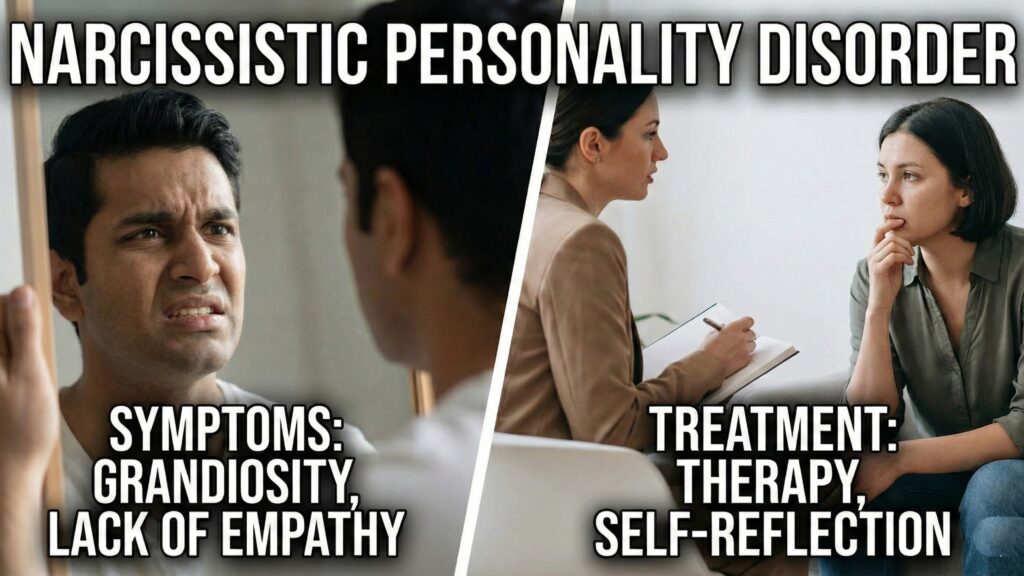
Symptoms of Narcissistic Personality Disorder often appear in behaviour and relationships. They may be mild in some people and more intense in others.
Many individuals feel a strong need for praise and attention. They may believe they deserve special treatment. Criticism can feel extremely painful, even if it is small.
Empathy is often limited. Understanding others’ feelings can be difficult. Because of this, relationships may feel one-sided or conflict-filled.
Some people also experience emotional reactions such as anger, withdrawal, or shame when they feel ignored or rejected.
Over time, these patterns can affect work performance, friendships, and family life.
When to See a Doctor
People with Narcissistic Personality Disorder rarely seek help early. Often, treatment begins when emotional stress becomes overwhelming or when relationships start breaking down.
Professional help is important if behaviour causes repeated conflict, emotional distress, or social isolation. Constant feelings of emptiness, anger, or rejection also require attention.
A mental health professional can evaluate symptoms and suggest appropriate treatment. Early help improves long-term emotional stability.
Causes
There is no single cause of Narcissistic Personality Disorder. Research shows that several factors work together.
Childhood experiences often play a strong role. Excessive praise, harsh criticism, neglect, or emotional inconsistency can shape personality development.
Biological factors may also contribute. Differences in emotional processing and empathy-related brain functions may influence behaviour patterns.
The environment also matters. Family dynamics, social expectations, and early emotional experiences all shape self-image and emotional regulation.
In most cases, Narcissistic Personality Disorder develops from a mix of emotional, biological, and environmental influences.
Risk Factors
Some individuals are more vulnerable to developing Narcissistic Personality Disorder. Early emotional stress, unstable family environments, or lack of emotional validation may increase risk.
Children who receive extreme praise or extreme criticism without balanced emotional support may struggle with self-identity. Over time, this can influence personality development.
Genetic and psychological vulnerability can also increase risk, especially when combined with stressful life experiences.
Complications of Narcissistic Personality Disorder
If untreated, Narcissistic Personality Disorder can create long-term challenges. Relationships may become strained due to conflict or emotional distance.
Workplace difficulties may arise because of criticism, sensitivity or interpersonal tension. Emotional instability can lead to anxiety, depression, or chronic stress.
Some individuals experience deep loneliness despite appearing confident. Emotional frustration may increase when expectations are not met.
Treatment helps prevent these complications and improves quality of life.
Can Narcissistic Personality Disorder Be Prevented?
Complete prevention is not always possible. However, healthy emotional development can reduce risk.
Balanced parenting, emotional communication, and supportive environments help children develop stable self-esteem. Early counselling also helps when behavioural patterns appear.
Recognising emotional struggles early is one of the most effective preventive steps.
Treatment Options
Treatment for Narcissistic Personality Disorder focuses mainly on psychotherapy. Therapy helps individuals understand their behaviour, emotional triggers, and relationship patterns.
Through therapy, people learn to regulate emotions, develop empathy, and build realistic self-esteem. They also learn healthier communication and coping strategies.
Medication is not used to treat the personality disorder itself. However, it may help manage related symptoms such as anxiety, depression, or mood changes.
Personality patterns change slowly. Consistent therapy brings gradual but meaningful improvement.
Living with Narcissistic Personality Disorder
Living with Narcissistic Personality Disorder can be challenging, but improvement is possible. Self-awareness is the first step. Understanding emotional patterns helps people respond more calmly and build stronger relationships.
Support from family and mental health professionals improves recovery. With proper guidance, emotional balance and a healthier self-image can develop over time.

If you notice signs of Narcissistic Personality Disorder, professional support is important. Accurate diagnosis and structured therapy help manage symptoms effectively.
You can consult Dr Ankesh Singh at COGNiZEN CARE for expert mental health care.
COGNiZEN CARE offers professional assessment, therapy support, and long-term personality disorder treatment in a confidential environment.
Final Thoughts
Narcissistic Personality Disorder is a complex but treatable mental health condition. With early recognition and consistent therapy, emotional balance and healthier relationships are possible.
Seeking professional help is a strong and positive step. Mental health care supports growth, understanding, and long-term well-being.
If symptoms are affecting life or relationships, reaching out for support can make a meaningful difference.