
Eating disorders are no longer rare in India. Over the past decade, doctors and mental health professionals have seen a steady rise in eating disorders, especially in urban areas like Gurgaon, Delhi NCR, Mumbai, and Bengaluru. Changing lifestyles, social media influence, work pressure, and body image concerns have made eating disorders more visible, yet still widely misunderstood.
Eating disorders are not about food alone. They are serious mental health conditions that affect emotions, thoughts, and physical health. With early diagnosis and proper care, recovery is possible.
What Are Eating Disorders?
Eating disorders are mental health conditions that disturb a person’s relationship with food, body weight, and self-image. The most commonly seen eating disorders in India include:
- Anorexia nervosa, where a person restricts food and fears weight gain
- Bulimia nervosa, marked by binge eating followed by purging
- Binge eating disorder, involving repeated loss of control while eating
- Other eating disorders, where symptoms cause harm but do not fit strict categories
These conditions affect both men and women. Earlier, eating disorders were mostly reported in young women, but recent Indian research shows rising cases among men and adolescents.
What Does Research Say About Eating Disorders in India?
Indian mental health research shows that eating disorders are underdiagnosed. According to hospital-based studies published by Indian psychiatric institutions, many patients seek help only when physical complications appear.
A study conducted in urban Indian colleges found that nearly 25–30% of students showed signs of disordered eating behaviours, even if they did not meet full diagnostic criteria. This indicates a large hidden population at risk.
Research from government medical colleges has also highlighted that urban youth are more vulnerable due to exposure to social media, body comparison, and academic pressure. In cities like Gurgaon, professionals working long hours are also increasingly reporting binge eating and emotional eating patterns.
The World Health Organisation has noted that eating disorders contribute significantly to disability among young people worldwide, and Indian data is now reflecting the same trend.
Why Are Eating Disorders Increasing in India?
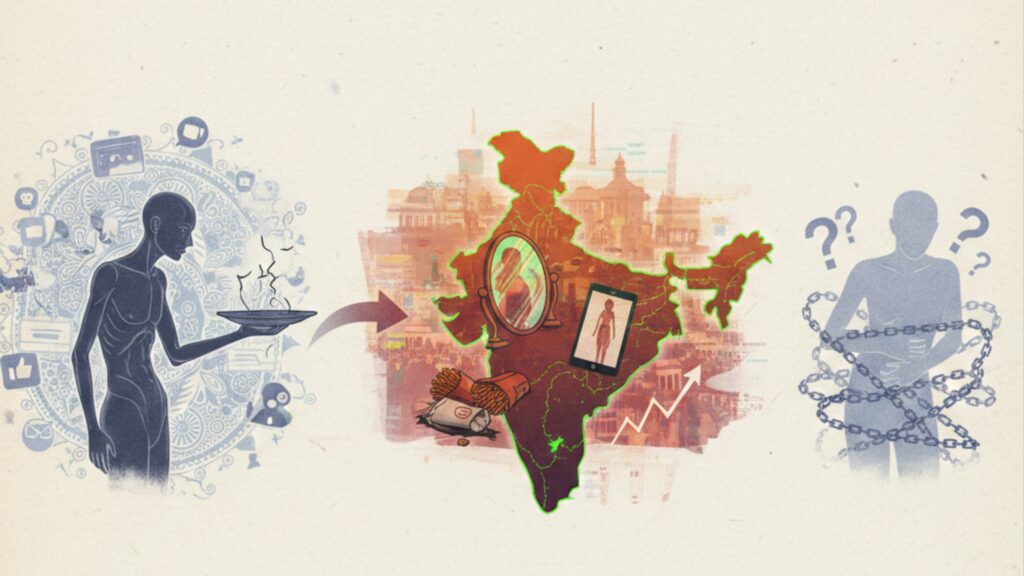
Eating disorders do not have a single cause. Research suggests a combination of factors.
Cultural and Social Pressure
Indian society has changed rapidly. There is more focus on appearance, fitness, and body shape. Social media trends promote unrealistic body standards. This constant comparison affects self-esteem.
Psychological Factors
Studies show that people with high anxiety, perfectionism, or low self-worth are at greater risk. Many individuals with eating disorders also struggle with depression or anxiety.
Stress and Urban Lifestyle
Research from Indian metropolitan cities links eating disorders with high stress levels. Long working hours, irregular meals, and lack of sleep disturb normal eating patterns.
Diet Culture
Frequent dieting, extreme fitness challenges, and weight-loss pressure can trigger eating disorders, especially among young adults.

Common Signs and Symptoms
Research shows that early symptoms are often missed or ignored.
Physical signs include:
- Sudden weight loss or weight gain
- Constant fatigue
- Hair thinning or hair fall
- Dizziness and weakness
- Irregular menstrual cycles
Behavioural signs include:
- Skipping meals regularly
- Eating in secret
- Obsessive calorie counting
- Excessive exercise
- Frequent bathroom visits after meals
Emotional signs include:
- Strong fear of weight gain
- Body dissatisfaction
- Mood swings
- Social withdrawal
Early identification leads to better outcomes.
Health Risks and Complications
Medical research confirms that untreated eating disorders can cause serious harm.
Possible complications include:
- Heart rhythm problems
- Electrolyte imbalance
- Hormonal issues
- Digestive damage
- Bone weakness
Mental health complications are equally serious. Studies show higher rates of depression, anxiety, and suicidal behaviour in people with eating disorders. This makes timely treatment essential.
How Are Eating Disorders Diagnosed?
There is no single test for eating disorders. Diagnosis requires careful evaluation.
A psychiatrist or mental health specialist will:
- Take a detailed mental health history
- Assess eating patterns and body image concerns
- Conduct physical examinations
- Recommend blood tests if needed
- Screen for anxiety, depression, or trauma
Indian research emphasises that psychiatric evaluation is crucial, as eating disorders are often linked with other mental health conditions.

Treatment: What Research Supports
Evidence-based research shows that multidisciplinary treatment works best.
Psychiatric Care
Psychiatrists assess the need for medication, especially when anxiety or depression is present.
Therapy
Cognitive behavioural therapy (CBT) has strong research support for eating disorders. Family-based therapy is effective for adolescents.
Nutritional Rehabilitation
Structured meal planning helps restore healthy eating habits and reduces fear around food.
Medical Monitoring
Regular check-ups prevent complications and ensure safe recovery.
Research clearly shows that early treatment improves recovery rates and reduces relapse.
Eating Disorders in Gurgaon and Urban India
Gurgaon reflects many of the risk factors identified in research:
- Corporate stress
- Long working hours
- Fitness pressure
- Social media influence
Mental health professionals in Gurgaon report an increase in eating disorder cases among professionals and students. Awareness and access to care are improving, but stigma still delays treatment.
Role of Family and Community
Indian studies stress the importance of family involvement. Supportive families improve treatment success.
Families should:
- Avoid blaming language
- Encourage professional help
- Attend counselling sessions
- Watch for warning signs of suicidal behaviour
When to Seek Immediate Help
Urgent care is needed if there are:
- Fainting episodes
- Severe weakness
- Rapid weight changes
- Thoughts of self-harm or suicide
Prompt medical attention can save lives.
Professional Guidance for Eating Disorders in India

Eating disorders require expert care. Self-help alone is not enough.
For residents of Gurgaon and Delhi NCR, Dr Ankesh Singh, Consultant Psychiatrist at Cognizen Care, offers professional support for eating disorders. His approach combines psychiatric evaluation, therapy coordination, and long-term mental health planning.
Dr Ankesh Singh focuses on treating eating disorders as mental health conditions, not lifestyle choices. With proper diagnosis and care, recovery is achievable.
If you or someone you care about is struggling with eating disorders, seeking help early can change the course of life.
Healing is possible. Help is available. And you do not have to face this alone.